Servings
4 ServingsPrep time
10 MinutesCooking Time
35 MinutesCalories
--- KcalLoin chops that stay juicy, rice cooker doing the easy half
Boneless chops cut from a whole pork loin, seasoned with Lawry’s and cooked in one pan, with the rice cooked in the drippings. The loin is the leanest part of the pig, so everything here is aimed at the one problem it has: it gives up its juice and goes dry.
Ingredients
Pork
- 1 pork loin, cut into 1-inch chops (4 chops, about 2 lbs)
- 1 tbsp Lawry’s Seasoned Salt 1
- 1 tbsp neutral oil
Rice
- 1 1/2 cups basmati 2
- 2 1/4 cups chicken broth
- 1 tbsp butter
- Salt
Pan sauce (optional, made while the chops rest)
- 1/2 cup chicken broth
- 1 tbsp cold butter
Directions
- Season the chops the day before, or at least 45 minutes ahead. Cut the loin into 1-inch chops, sprinkle both sides with Lawry’s, and set them on a rack over a plate — uncovered — in the fridge. This is the single biggest fix for juice loss. 3
- Rinse the rice and start the cooker. Rinse the basmati until the water runs mostly clear, then cook it with the broth, butter and a pinch of salt. Start it first — a rice cooker holds on warm indefinitely, so rice waits for pork far better than pork waits for rice.
- Pat the chops dry and let them lose their chill while the rice runs. 20-30 minutes on the counter. A cold chop needs longer in the pan, and longer in the pan is what dries it out.
- Sear hot, but only to sear. With about 10 minutes left on the rice, heat the oil in a heavy skillet until it just shimmers. Lay the chops down and leave them alone 2-3 minutes, until the underside is properly browned. Flip once. 4
- Drop the heat to medium and finish to temperature. Another 3-5 minutes depending on thickness. Start checking early with an instant-read thermometer in the center of the thickest chop.
- Pull at 140-145°F, not 150. Move them to a plate or cutting board. 5
- Rest 8-10 minutes, and do not cut into them. Tent loosely with foil if you like, but don’t wrap them tight or the crust steams off. Cutting a chop straight out of the pan is what puts the juice on the board instead of in the meat.
- Make the pan sauce while they rest. Pour off the excess fat, put the pan back on medium, add the broth, and scrape the browned fond loose. Reduce by half, kill the heat, swirl in the cold butter, and add any juice that collected under the resting chops. Spoon it over everything.
Rice and chops land within a couple of minutes of each other, and both are hot.
Notes
- Why the chops go dry. Loin has almost no intramuscular fat, so there is nothing to mask overcooking. Muscle fibers contract and squeeze out water as they heat, and the rate climbs steeply past about 150°F. Every fix above is about spending less time above that line.
- Searing does not “seal in” juices. That idea has been tested and discarded — seared meat loses slightly more moisture than unseared. Sear because browning tastes good, then get off the high heat and finish gently.
- Lawry’s has sugar in it. Sugar, paprika, and onion powder all scorch. That is why the heat drops after the sear: on high the whole way through, the seasoning burns before the center is done, which is also how you end up overshooting the temperature chasing color.
- A thermometer is not optional here. One inch of lean pork goes from juicy to chalky inside about 60 seconds of cooking. Timing by the clock cannot catch that; a probe can.
- If you like a thicker chop, cut the loin at 1 1/2 inches and reverse-sear: 275°F oven until the center hits 130°F, then a hard 60-second sear per side. More forgiving, more even, and worth the extra time.
- No rice cooker? Cook the rice in the skillet after the chops come out: soften a diced onion in the drippings, toast the rice a minute, add the broth, scrape the fond, then cover and cook on low 15 minutes plus 5 off the heat. Better flavor, worse timing — the chops will be warm rather than hot, so serve them sliced over the rice instead of whole.
Footnotes
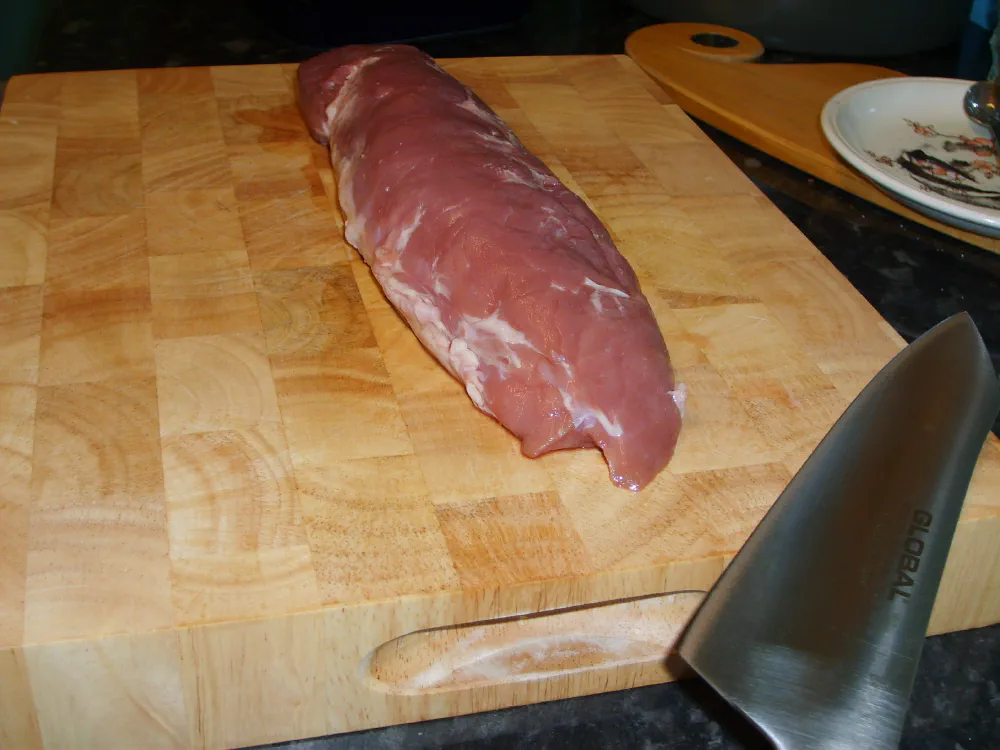
Photo: “Pork loin” by Father.Jack, CC BY 2.0.
.jpg)
-
Lawry’s is salt, sugar, paprika, turmeric, onion and garlic powder. Because it is mostly salt, it works as a dry brine on its own — no separate salting step needed. ↩︎
-
Basmati is a long-grain white rice, so it slots straight in, but it is drier and thirstier per grain than standard long-grain and wants less liquid, not more — about 1:1.5 rather than 1:2. Rinsing matters more than with other rice: it washes off loose surface starch and is the difference between separate grains and a clump. If your cooker has a basmati or “long grain” setting, use its ratio over mine. ↩︎
-
Salt first pulls moisture to the surface, then that brine dissolves some of the muscle proteins and is drawn back in. The result is meat that holds noticeably more of its own water through cooking and is seasoned all the way through instead of just on the crust. Uncovered in the fridge also dries the surface, and a dry surface browns instead of steams. ↩︎
-
Moving the chops around resets the contact temperature every time and gives you grey meat with no crust. One flip. ↩︎
-
Carryover cooking keeps the center climbing about 5°F after the chop leaves the pan. Pull at 145 and it settles near 150; pull at 150 and it finishes near 155, which is where lean loin starts to tighten up. USDA considers whole-muscle pork safe at 145°F with a 3-minute rest, and the rest here is far longer than that. ↩︎